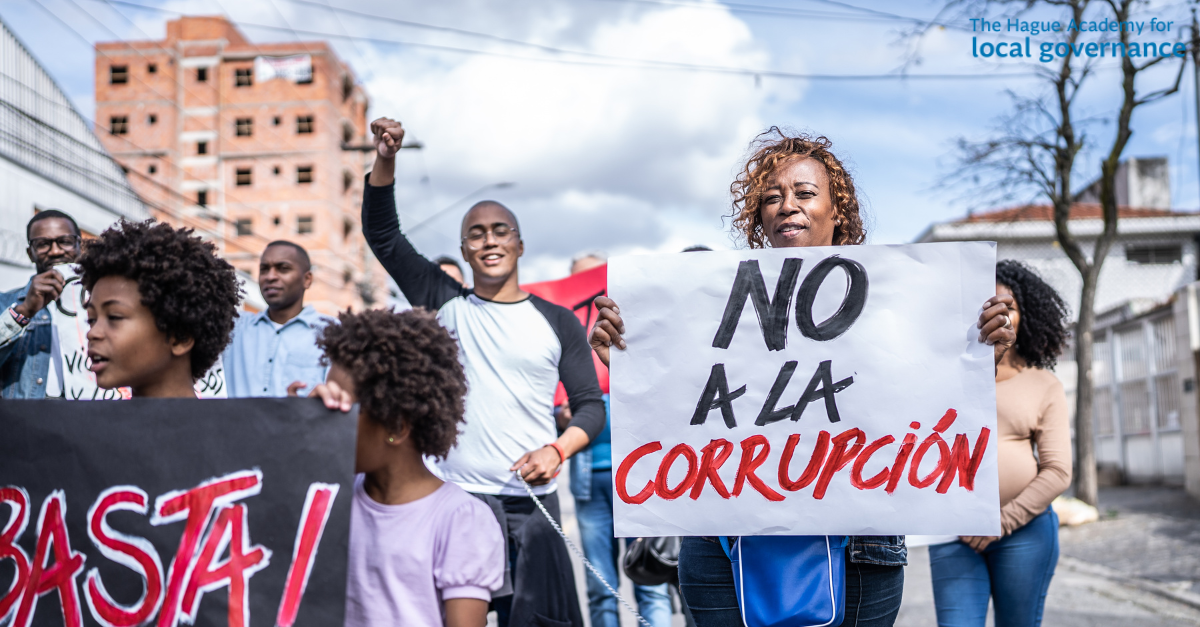
Corruption is a fundamental cause of poverty, conflict, and state fragility. It undermines a state’s ability to effectively deliver public services, uphold the rule of law, and foster a conducive business environment. Furthermore, corruption presents a significant obstacle to sustainable economic and social development. Research has consistently demonstrated that marginalised communities are disproportionately affected by its consequences.
The course examines the underlying factors driving corruption and their impact on development. Participants will explore strategies to address these root causes and gain insights into international initiatives, legislation, and agreements aimed at combatting corruption. The course presents examples of integrity policies that prevent corrupt practices by fostering a culture of ethics within public institutions, and ensuring that governments operate in the best interest of their citizens. Additionally, various policy instruments, including codes of conduct and whistleblower protection regulations, will be discussed.
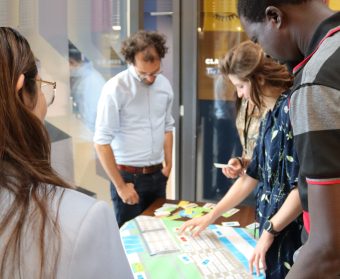
The programme includes a workshop on integrity dilemmas, in which participants share experiences, challenges, and practical insights from their professional environment. By engaging with fellow professionals from diverse backgrounds, participants will broaden their perspective on integrity and anti-corruption efforts worldwide.
The training allowed us to exchange experiences and knowledge with peers and experts about topics such as corruption analysis, transparency, and social norms strategies. I was particularly inspired by “the integrity building blocks approach” as it sets decision making guidelines for a responsible moral decision. I see great potential to apply it in my work.
Aroua Ben Ammar, Public Service Advisor, Tunisia
Key Information
This course is aimed at professionals involved in anti-corruption, transparency and accountability processes concerning development and governance. Participants come from national, regional and local government, knowledge institutes, NGOs and donor and development organisations.
This training will take place from 06 September 2027 to 10 September 2027.
The course fee is € 2,995 *. This includes all training related costs as well as drinks and warm lunches during the training days. Group discounts are available if organisations participate with three or more colleagues.
This training takes place in The Hague, Netherlands.
After this course, participants will receive a professional certificate of completion from The Hague Academy for Local Governance.
*Professionals employed by a local government or by a local NGOs on the DAC list of ODA-recipient countries (OECD) may qualify for a reduced course fee. Contact us for details.
Learning objectives
Guided by high-level, international experts, participants will:
Define key concepts and international frameworks for the promotion of integrity and prevention of corruption;
Explore the widespread nature of corruption and its effects on social and economic development, as well as the rule of law;
Identify and practice with methodologies for corruption analysis;
Understand integrity systems in organisations, and the tools needed to design them;
Recognise and respond to ethical dilemmas in their work;
Review integrity and anti-corruption policies from their local context, and identify actionable steps to address gaps and drive positive change.
Experts
Experts who previously were involved in this course:
Paul Banoba
Paul is the Africa Regional Advisor for Transparency International, where he has been working for over 12 years. He has also worked as a consultant, a programme coordinator and a training manager in a.o. Kenya, Uganda, and Ethiopia.
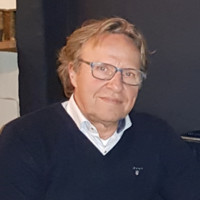
Hans Stukart
Hans Stukart is an integrity trainer and director of Dilemmics with over 20 years of experience working on assignments for, among others, the Ministry of Foreign Affairs, the Netherlands Helsinki Committee, and the Association of Dutch Municipalities (VNG).
Lodewijk Gualthérie van Weezel
Lodewijk has 20 years of work experience in the field of Anti-Bribery and Corruption. He works as Senior Compliance Officer at the Dutch Entrepreneurial Development Bank (FMO). Lodewijk also worked at the World Bank Department of Institutional Integrity, investigating corruption within their projects in Africa and the Middle East.
Kitty Nooy
Kitty is a trainer and coach in ethical leadership. She has over 35 years of experience in different positions in the Public Prosecution Service of The Netherlands, where she specialised in integrity and ethical leadership.
Shahenda ElNaggar
Shahenda is an expert in digital governance, and programme manager and trainer at The Hague Academy with a focus on the MENA Region. She holds a Joint MA in Public Policy with a focus on Political Economy and Development from Erasmus University Rotterdam (EUR) and from the Universitat Pompeu Fabra (UPF).
Experience
Participants will engage with leading practitioners and experts in the field of integrity and anti-corruption, gaining insights into global trends, best practices, and challenges. They will analyse real-life cases, learning how different policies and interventions have been applied in various contexts.
Interactive exercises help participants develop practical skills for handling integrity-related challenges in their own work environments. In a dilemma-workshop, participants will discuss ethical dilemmas from real-life cases and explore decision-making scenarios. Through role-plays and simulations, they learn how to deal with the complexities of enforcing integrity policies and corruption risks in a controlled setting.
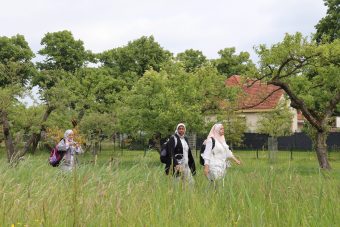
Study visits to the city of Rotterdam and the Ministry of Defense show how public authorities in The Netherlands develop integrity policies and work towards a culture of integrity in their organisations. Participants will also experience transparency of government data during an open data tour in the city of Utrecht. Furthermore, the Public Prosecutor for Anti-corruption of The Netherlands shares experiences with the enforcement of anti-corruption policies.
The cost of corruption is measured not just in the billions of dollars of stolen or misused public funds, but in the trust of citizens in their governments and institutions.
World Bank Group
Practical information
Find the practical information for the course here.
After submitting your completed application, you will receive a confirmation of receipt. Once we have assessed your application and admitted you to the course, we will send you an invoice with payment details.
Payments can be made by bank transfer or by PayPal request. We offer the option of paying in one or two instalments. An advance payment of 50% secures the reservation of a seat at the training until the payment deadline, one week prior to the course start date. Your participation in the course is guaranteed only after receipt of full payment.
Please note that The Hague Academy accepts registrations on a first-paid, first-served policy.
Some countries require a visa to enter the Netherlands. Please check with The Netherlands or the embassy for the visa requirements related to your country. Because of the length of time needed for the visa procedure, we advise you to start this process as soon as possible. Once we have received your payment for the course, The Hague Academy will send you an acceptance letter which will assist you in arranging your visa to The Netherlands.
We understand that unforeseen circumstances may arise, necessitating the cancellation of your attendance. In such cases, please be aware of our cancellation policy:
For cancellations due to circumstances beyond your control, a reimbursement can be arranged, subject to an administration fee of €350.
Cancellations made between four and two weeks before the training commences will incur a charge equivalent to 50% of the course fee.
Cancellations made within two weeks of the training start date, will result in an 80% charge of the fee.
In the event of a no-show, there will be a 100% charge of the fee.
Alternatively, you may nominate a qualified substitute to attend the course in your place at no additional cost.
The Hague Academy for Local Governance reserves the right to cancel a course if the number of participants is insufficient or due to any other unforeseen circumstances. In this case, your payment will be 100% reimbursed. Other costs such as transportation or hotel cannot be reimbursed.
Download the Course Brochure
Do you want to receive more practical information? Download our brochure!
At the Hague Academy, we specialise in developing training programmes that fit your specific needs. Contact us if you are interested in a customised training!