How to develop strategies to deal with the local impact of migration and forced displacement.

How can municipalities support the integration of refugees while maintaining social cohesion and service delivery? In Kenya, this question is at the heart of a big policy shift—and local civil servants are leading the way.
With more than 800,000 refugees in Kenya and growing pressure on host communities, good local governance is essential. In early April, 31 Kenyan civil servants joined a two-week programme in the Netherlands as part of the Sustainable Development through Local Governance initiative by VNG International. With its expertise in training civil servants, The Hague Academy contributed by co-facilitating the exchange programme and co-developing local training curricula with the Kenyan School of Governance.
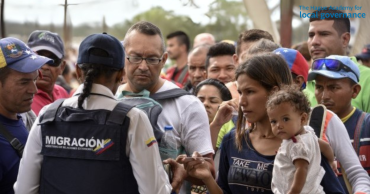
The SDLG-project supports Kenyan civil servants involved in implementing the Shirika Plan — a national strategy to foster the socioeconomic inclusion of refugees in Kenya. The refugees come from neighbouring countries and with the recent crisis in South Sudan numbers are increasing rapidly. Currently, the majority of these individuals are hosted in the large refugee camps in Garissa and Turkana. The counties directly feel the impact on their local service delivery capacity and look for support from the national government. Ultimately, the plan intends for these camps to become municipalities, with refugees integrated in public service delivery.
Fore more background information about the project in collaboration with VNG International and Kenya School of Government, you can read our previous article on Transforming Migration Management in Kenya.
Training the trainers: Local capacity with a multiplier effect
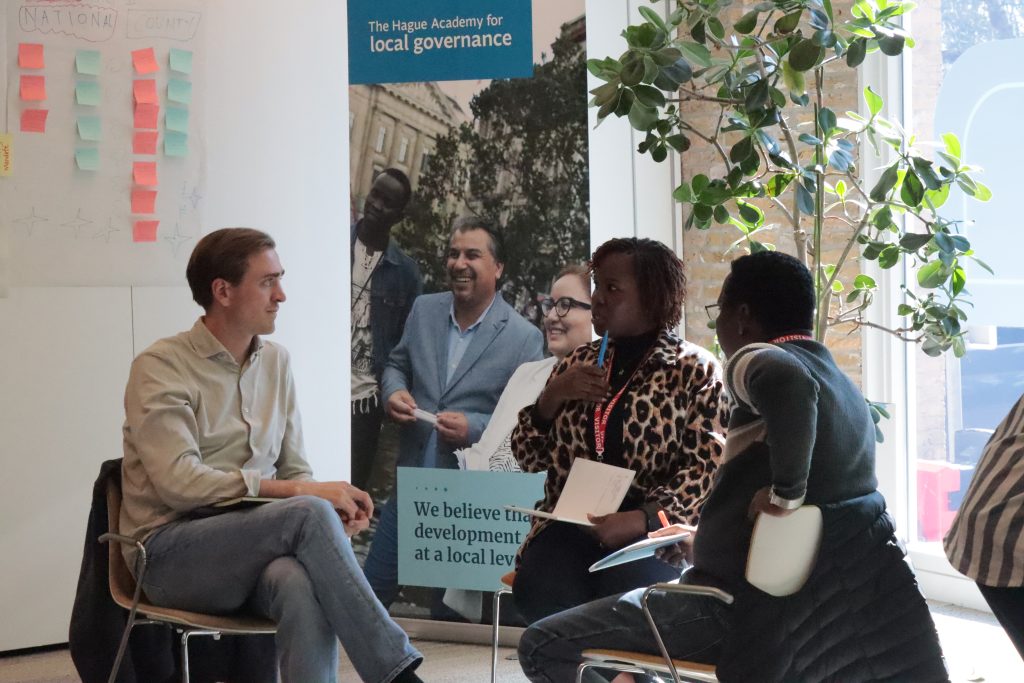
The first part of the programme centred on a Training of Trainers-programme, to ensure that insights and best practices can be passed on to more practitioners by local trainers.
The Hgaue Academy partnered with the Kenya School of Government (KSG) to codesign a local training curriculum. KSG is committed to strengthening the knowledge, skills, and competencies of public officials across Kenya, to ensure that local capacity is strengthened and multiplied through local civil servants. Trainer and researcher from KSG, Purity Kagendo, highlighted the participatory nature of the sessions:
“We had a lot of time for individual discussions, so we could explore the topics and training methodology more in-depth.”
Participants noted that the inclusive approach encouraged deeper reflection, allowing them to explore diverse perspectives and build trust across professional and personal differences. Fellow KSG trainer Paul Chayuga appreciated the practical applications:
“We examined how to implement policies and theories through real-life examples—I look forward to putting this into practice back home.”
Dutch Municipal Models for Refugee Inclusion
The programme in the Netherlands included practitioners and representatives from county governments and natoinal government. Participants took part in cross-stakeholder discussions, expert sessions, and field visits to explore Dutch best practices in refugee integration.
Site visits to the Koudenhoek shelter in Nijmegen and Plan Einstein Pahud in Utrecht provided compelling examples of initiating refugee integration from day one. These visits showed how municipalities play an essential role in turning national policy into local action.
John Burugu, Commissioner at Kenya’s Department of Refugee Services:
“The use of a common language in schools and in broader society supports cohesion across borders and communities. The programme showed how municipalities are essential to pick up the tempo set at national level.”
Shaping local policy through collaborative dialogue
The programme culminated in a symposium on the Shirika Plan implementation, bringing together Dutch and Kenyan policymakers, researchers, and practitioners.
Hon. Peter Lochakapong, Chairperson of Kenya’s Regional Development Committee, underscored the relevance of Dutch approaches for local implementation:
“Distributing refugees proportionally across municipalities, based on population and socio-economic factors, is a good strategy. It helps ensure governments can lead in resource allocation and capacity strengthening.”
From dialogue to implementation
The programme supported Kenyan civil servants from different levels of government as they lead the Shirika Plan’s implementation. Through practical training, peer learning, and policy dialogue, they are now better equipped to cooperative and apply innovative locally-driven approaches to refugee integration.
As the Shirika Plan progresses, these experiences will serve as a foundation for better local services for both refugees and host communities and a more cohesive local society.
Would you like to support your local government or partner organisations with practical knowledge and strategies to manage the local impact of migration? Join our Local Response to Migration and Refugees course and connect with practitioners shaping refugee policy worldwide or ask for a tailor made training.

Local assembly in Kenya. Photo credits by VNG International.
Related courses
We offer a diversity of courses throughout the year. Here are several other courses you might like.