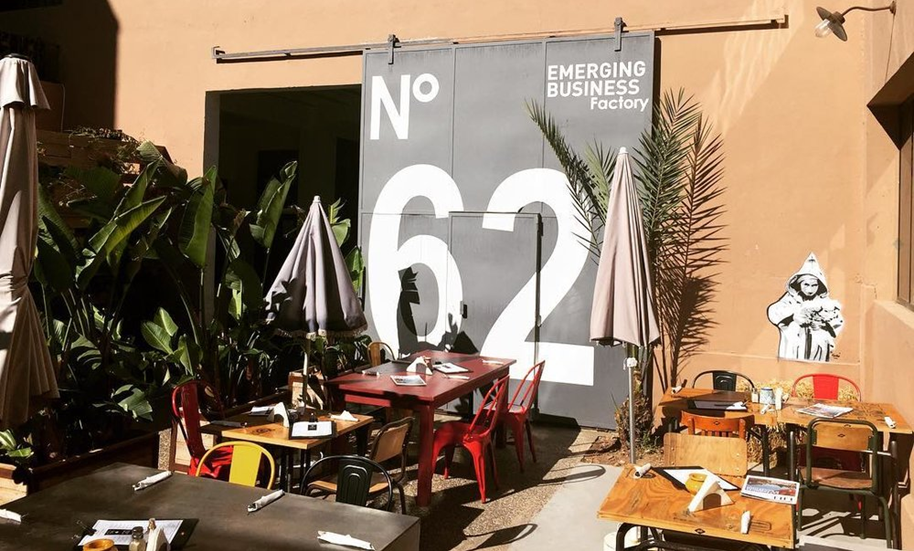
How to develop a LED strategy and improve conditions for entrepreneurship and job creation.

Resilient local economies are shaped by regional and local governments with a clear vision for the future and a strong framework for local economic development. By creating enabling conditions for businesses and entrepreneurs and involving the right stakeholders, they encourage local professionals to develop business ideas and offer practical guidance. In The Netherlands, the government supports non-profit organisations and universities in providing knowledge, coaching and networks to young entrepreneurs.
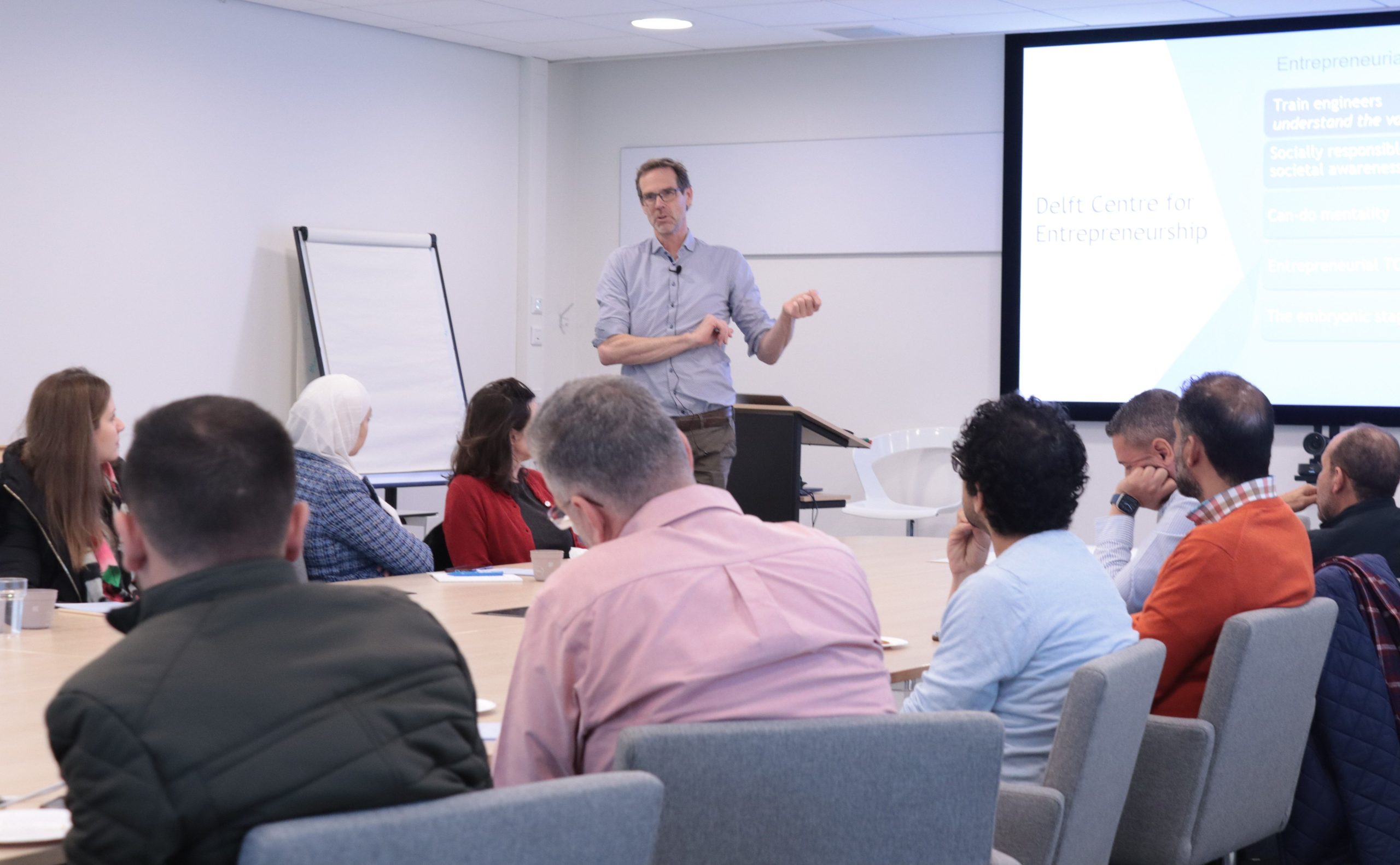
Training participants visit the Centre for Entrepreneurship of TU Delft, as part of the Shiraka Ecosystems for Entrepreneurs-programme.
TU Delft supports its students in realising start-ups
Civil servants and entrepreneurs from Egypt visited TU Delft’s Centre for Entrepreneurship as part of the Shiraka training Ecosystems for Entrepreneurs. The centre supports 800 students each year in developing and launching their own technology-based firms and venture projects within established organisations. It helps students recognise opportunities, test ideas, work in teams, engage with external actors, and present their business concepts in masterclasses and workshops. Furthermore, TU Delft connects students to entrepreneurship coaches and initiatives such as YES!Delft, Delft Enterprises, and the Impact Studio. These platforms help budding ideas move closer to their realisation by offering coaching, pitching opportunities, and access to research institutes and relevant networks.
PUM connects small businesses to international experts
The group also visited PUM, a Dutch NGO, whose experts support small and medium-sized enterprises by collaborating on a voluntary basis with entrepreneurs and business support organisations in thirty countries across Africa, South-East Asia, and South America. PUM’s senior Planning, Monitoring, Evaluation and Learning officer, Rens Rutten, highlights that strong ecosystems are built on relationships and trust: beyond access to finance and infrastructure, entrepreneurs often need concrete guidance from experienced experts. Areas of support relate to productivity, quality, financial management, marketing, or business strategy.
Rens also mentions the need to connect entrepreneurs with suppliers, buyers, sector associations, vocational training institutes, research institutes, and regulatory bodies. He recommends that governments seeking to strengthen entrepreneurial ecosystems invest in networks and platforms that connect entrepreneurs with relevant ecosystem actors and facilitate bottom-up initiatives. “Strong entrepreneurial ecosystems are built on relationships and trust, besides policy instruments.”
Mentoring and peer exchange are especially important. They help entrepreneurs avoid reinventing the wheel, learn from others facing similar challenges, and make better decisions for their businesses.
“Exchange allows entrepreneurs to make better-informed decisions based on learnings from the local context, while also guiding business support organisations and other stakeholders on the most effective way to support these entrepreneurs beyond financial assistance.” – Rens Rutten, Senior PMEL Officer at PUM

In Zimbabwe’s Matabeleland region, Ebenezer Agricultural Training Centre prepares young people for careers in agriculture. With support from PUM experts and the local authorities, trainers are strengthening their teaching methods to make learning more interactive, practical and impactful, enabling a new generation of agricultural entrepreneurs to grow. Photo credits: PUM
Entrepreneurial ecosystems need structure and relationships
In conclusion, for local authorities the lesson is clear: they have to actively engage the right stakeholders to develop ecosystems that support entrepreneurship, new businesses, job creation, and economic growth. Explore how local governments and development practitioners can support entrepreneurial ecosystems in their own contexts, in our course on Local Economic Development.
Related courses
We offer a diversity of courses throughout the year. Here are several other courses you might like.