How to build climate resilience and improve local response mechanisms of local authorities.

Tunisia’s water resources are increasingly strained by prolonged droughts, erratic rainfall, and growing agricultural demands. To ensure access to water in the future, technical solutions are not enough. The problem can only be solved when all actors, from ministries to local governments and farmers, are involved.

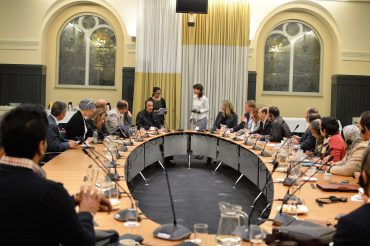
The collaboration between the government and local communities was the starting point of a two-part training on Climate-Smart Water Management in Agriculture. The programme, initiated by the Tunisian Ministry of Agriculture, Hydraulic Resources and Fisheries, aimed to strengthen the capacities of its staff to address water shortages and food insecurity. It emphasised the need to move from isolated technical responses to integrated, multi-level strategies.
Civil servants and water professionals learned about general concepts of multilevel governance and stakeholder cooperation, the use of decision support systems and open source data, solutions for climate-smart agriculture, and strategies for institutional change. The participants came , from the Ministry and its national and regional agencies. They discussed how to improve cooperation and coordination between each other as well as with other sectors. Moreover, participants were strongly encouraged to include actors often left out of policy processes: farmer associations, water user groups, local authorities, and civil society organisations. For many participants, the biggest impact of the training was a shift in mindset: from top-down policy thinking to inclusive planning and consultation.

Exploring integrated water management strategies
The first training, held in February 2025, began with an introduction to Integrated Water Resources Management (IWRM) and the importance of multilevel collaboration. Participants explored the Water-Energy-Food-Ecosystem (known as the WEFE Nexus), tested the tools incorporating Nexus approach, and engaged in group exercises to reflect on governance structures and stakeholder gaps.
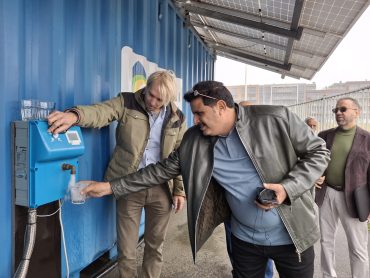
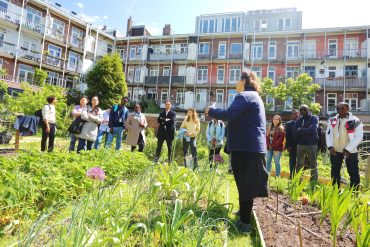
A field visit to the BONEX (Boosting Nexus Framework Project in the Mediterranean) demonstration site in Oudrainne helped connect theoretical discussions to agricultural realities. Farmers leading the project showcased how reclaimed water and circular farming practices are helping them adapt to changing rainfall patterns, offering insights into community-driven innovation.

It was a pleasure for us at FutureWater to contribute to the training on ‘Climate Smart Water in Agriculture’ and analyse water flows within agricultural systems using different tools and open-source datasets, tailored to the Tunisian context.
Tania Imran, FutureWater
Planning for implementation with local actors in mind
Returning in May with draft action plans, participants received advanced training in remote sensing tools, Earth Map and the WaPOR dataset, and tools that help measure irrigation impact and water use, such as the REWAS and the Foll0w-the-Water tool.
The programme concluded with a “Repair Café”, where participants reviewed their action plans, collaboraing with each other on refining their strategies, identifying gaps in local engagement, and integrating the week’s technical and strategic insights.

Designing better water policies through stakeholder engagement
For many participants, the biggest shift was the mindset: from top-down policy thinking to inclusive planning and consultation. In a final pitch, participants presented improved action plans, now incorporating mechanisms for dialogue with end-users and clearer coordination between institutions.
The training closed with a networking reception and a commitment from participants to carry forward lessons learned.

“I will apply the knowledge I have acquired in managing the irrigation of certain water-demanding crops, particularly industrial tomatoes”.
– Sana Amri Babay, Deputy Director, of the General Directorate Of Vegetable Crops Production, Ministry of Agriculture, Hydraulic Resources and Fisheries, Tunisia.
By putting more emphasis on effective cooperation and stakeholder engagement next to technical innovation, the programme supports Tunisia’s efforts to create a more inclusive, climate-resilient model for managing its most vital resource.
The Hague Academy designed and delivered the programme together with the Dutch research and consultancy agency FutureWater. It was part of the Shiraka programme funded by the Netherlands Ministry of Foreign Affairs and commissioned by the Netherlands Enterprise Agency (RVO).
Are you interested in strengthening your capacity in climate and water governance? Discover our upcoming courses on topics such as Multilevel Water Governance and Local Climate Response.
Related courses
We offer a diversity of courses throughout the year. Here are several other courses you might like.