How to promote gender equality through mainstreaming and inclusive participation approaches in policies and service delivery.

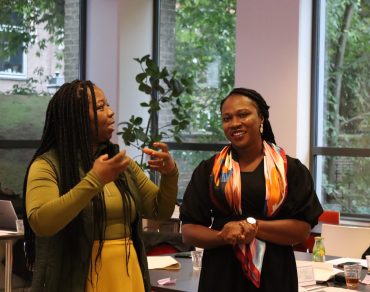
As vice president of a NGO for Women in Jordan, Iqbal Lutfi Hamad manages programmes that support women’s economic participation and builds partnerships with civil society and private-sector organisations. Her work focuses on communities in the Zay and Allan area, home to around 20,000 people.
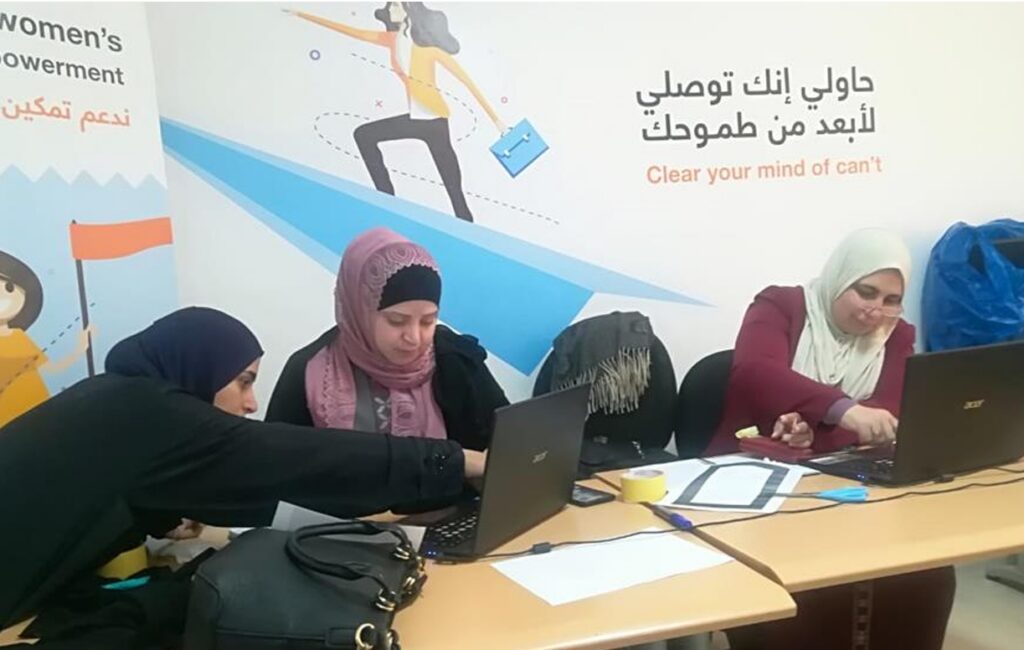
Jordanian women working together during a workshop on women’s economic empowerment.
Women and young people in Jordan face major barriers in the labour market. Women often have limited access to jobs and resources, face low wages and unsafe transport or working conditions, and leave the labour market early. Young women interested in science and technology often face stereotypes and pressure because the families do not see these fields as suitable for their careers, despite their talent and interest.
Iqbal, vice-president of the Basmat Al-Khair Women Charitable Organisation, joined The Hague Academy’s Local Economic Development course in 2021 to learn about practical tools for addressing these barriers and involving government, businesses, knowledge institutions and civil society in creating better economic opportunities for young women, particularly in traditionally male-dominated fields such as science, technology, engineering and mathematics (STEM).
Learning how to better include women in the labour market
During the course, Iqbal practiced with stakeholder analysis, SWOT analysis, and policy reviews, and learned about gender inclusion in local economic development. 
“The interactive session on gender inclusion in local economic development helped me become more sensitive to women’s and youth economic empowerment. It opened my eyes to the social norms that are often underlying the limited participation of women on the labour market.”
The tools helped Iqbal look beyond individual skills and employment challenges for women and examine the wider conditions such as norms, practices, and expectations that influence whether women enter and remain in the labour market.
Applying lessons learned on inclusive economic development
After the course, Iqbal applied these insights directly to her work.
“In 2021, I developed new project proposals to discuss and challenge stereotypes against young women who want to pursue science and STEAM careers.”
One project involved 100 students and their parents, addressing attitudes within families and schools and encouraging young women to consider a wider range of career options. The project later expanded to three additional governorates. 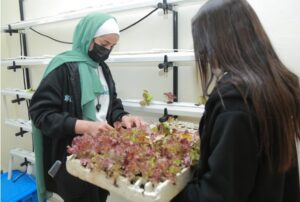
Iqbal also adapted a project for rural women to focus the project more on career preparation and access to decent work. The women joined round tables and workshops with government and private-sector representatives to discuss their role in economic and public life and the barriers they face in entering the labour market.
She also developed a training module on women’s economic empowerment that has since reached more than 300 women.
Building partnerships to create opportunities for women
For Iqbal, lasting change means addressing not only women’s skills, but also the environment around them: employers, public institutions, schools, families, and civil society all influence the opportunities available.
“My long-term ambition is to strengthen cooperation between all actors involved, improve the connection between education and labour market needs, and create more opportunities for women and young people to access decent work.”
Related courses
We offer a diversity of courses throughout the year. Here are several other courses you might like.