How to defend democratic values and contribute to democratic resilience.

Between 21 April and 3 October 2025, the Shiraka Training Programme on Local Governance provided a platform for civil servants from nine countries in the MENA region to engage in dialogue, learning, and collaboration. Despite varying local contexts, the participants share a common goal: to enhance the effectiveness and responsiveness of their governance systems, all the way from the national to the local level.

Professionals from Algeria, Egypt, Iraq, Jordan, Libya, Mauritania, Oman, and Tunisia convened to share their reflections on common challenges, learn about best practices, and build lasting partnerships, with each other and Dutch counterparts. The practical and interactive programme offered a space for participants to collaborate and learn through real-world scenarios and peer learning to support them in leading local governance improvements in their home countries.
Key Lessons from the Netherlands

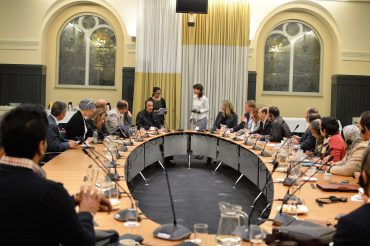
The blended learning format – with an online part and a face-to-face part in The Hague, paired with one-on-one coaching sessions, provided participants with the opportunity to learn from MENA experts and Dutch practitioners. In addition to the workshops and lectures, the participants visited key Dutch institutions: they explored the workings of Dutch municipalities and ministries and learned how citizen participation is integrated into infrastructure projects, ensuring that citizens have a real voice in decision-making. This hands-on exposure provided invaluable insights into how local governance can be more inclusive and responsive to the needs of all citizens.
One of the standout sessions was the visit to The Hague Municipality and the Stagehuis, a local youth organisation in the Schilderswijk district in The Hague. The visit highlighted the importance of effective youth engagement and inclusion in the organization of elections and throughout the year with civic activities. Participants saw how Dutch associations partner with government officials, promoting local governments to be more responsive to their citizens’ needs and strengthening democratic processes.
“My main takeaway from the programme is the importance of structured and inclusive citizen engagement to enhance the effectiveness and transparency of local policies. The programme allowed me to better understand how to mobilize local actors, design participatory strategies, and implement governance mechanisms adapted to local contexts while measuring their impact on sustainable development and social cohesion.” – Oussama Daly, Assistant Director of Planning, Ministry of Health, Tunisia
Back Home Action Plans
As the programme concluded, participants presented their Back Home Action Plans (BHAPs), where they shared their plans for implementing what they had learned. These action plans reflect their commitment to improving local governance, each country group addressing unique challenges while drawing on shared insights.
For instance, civil servants from the Palestinian Territories focused on modernising tax collection systems and improving communication with citizens, while the mayor of Mauritania identified the need for strengthened funding efforts for local economic development. Meanwhile, civil servants from Libya presented a BHAP that targeted standardising financial audit and reporting processes to increase transparency and accountability in local government. Tunisia’s BHAP builds on participatory approaches to assessing local needs. Oussama Daly explains:
“Upon my return to Tunisia, my Back Home Action Plan is to strengthen citizen participation mechanisms at the local government level and to improve the planning and monitoring of local development projects. This plan will be integrated into my activities of training and mentoring local administration staff to promote more inclusive and sustainable governance.”

A Shared Commitment to Improved Local Governance
The Shiraka Local Governance Training Programme is more than just a learning experience. It is an opportunity for local leaders to exchange expertise with peers and to see good local governance examples from The Netherlands. By sharing knowledge, building networks, and developing practical action plans, the participants get equipped to strengthen localisation, citizen engagement, and good governance in their respective countries.
We look forward to receiving updates about how the Back Home Action Plans are implemented and how the Shiraka alumni contribute to the long-term strengthening of local governance in the MENA region.
This training is part of the wider Shiraka programme funded and commissioned by the Netherlands’ Ministry of Foreign Affairs and implemented by the Netherlands Enterprise Agency (RVO). The Hague Academy for Local Governance designs and tailors the training to each cohort and is in charge of executing the project cycle.
Related courses
We offer a diversity of courses throughout the year. Here are several other courses you might like.