How to build climate resilience and improve local response mechanisms of local authorities.

In Sidi Bouzid, Tunisia, climate change is putting increasing pressure on farming systems. Lobna Hajji Hedfi works at the Centre of Agricultural Research of Sidi Bouzid in Tunisia, projects related regenerative agriculture and the challenges faced by women farmers due to climate change. Lobna joined The Hague Academy’s Local Climate Response course to strengthen her understanding of climate vulnerability, climate adaptation and resilience, and to explore practical and innovative approaches she could apply in her own work.
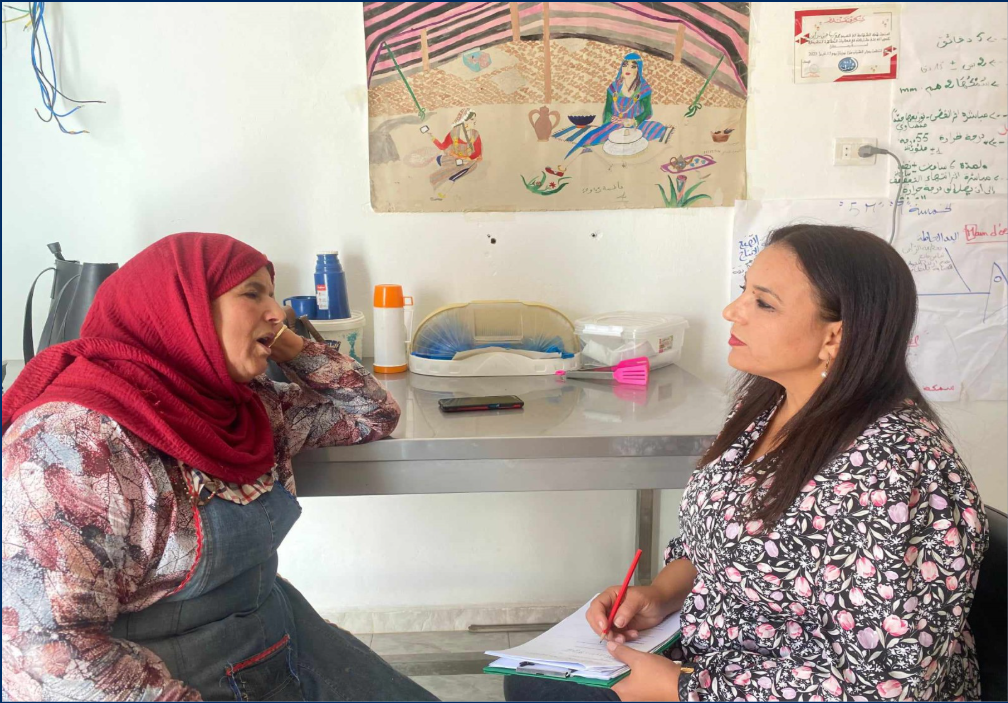
Lobna interviewing a female farmer about the challenges she is experiencing due to climate change.
A Learning Experience at The Hague Academy
One of Lobna’s main takeaways was learning how to assess climate vulnerability and distinguish between climate adaptation and resilience.
These insights helped her rethink ongoing work on gender and climate justice, as well as projects on regenerative agriculture.
“After learning about the difference between climate adaptation and resilience, I adjusted my work in the project related to the regenerative agricultural approaches for sustainable agriculture in climate change context to include climate resilience measures.”
Furthermore, the course also introduced her to adaptation practices for food security through examples from the Netherlands, which encouraged her to reflect on which approaches could be adapted to the Tunisian context.
A Back Home Action Plan for Climate Justice and Resilient Agriculture
After the course, Lobna translated these lessons into a series of concrete actions.
In July 2023, she established a partnership between Regional Centre of Agricultural Research of Sidi Bouzidm NGO APEDUP (Association of Environment Protection and Sustainable Development of Bizerte) and CRDA Sidi Bouzid (Representative of Agricultural Ministry),to work together to advocate for climate gender justice and improve rural women and young farmers capacity building.
Lobna also helped launch the Reseauclima project, which shares the results of the activities related ti climate justice through scientific publications, workshops and conferences.
Later that year, she conducted field surveys with women’s agricultural cooperatives and farmers to identify their main challenges and constraints due the impact of climate change and the vulnerabilities of the farming systems of Sidi Bouzid. Those surveys helped make a connection between gender and climate justice and will lead to new resilient approaches adapted to needs of Tunisian female farmers.
Lobna also started two projects with farmers in the Regueb region to test regenerative agricultural practices and assess how they can improve the resilience of vineyards and olive trees under climate-related stress.
She organised field schools and workshops on how regenerative practices can protect plants, soil, the environment and human health and supervised five Master’s students working on regenerative agriculture through two research projects she coordinates.
In November 2023, Lobna co-organised a national conference on adaptation strategies for agroecosystems under climate change and presented measures for strengthening adaptation and resilience in Tunisia’s arid regions.
By establishing collaboration between research, local communities, NGOs and the national government, Loubna is helping to develop climate justice approaches that respond more closely to the challenges of Tunisian women in agriculture.
Related courses
We offer a diversity of courses throughout the year. Here are several other courses you might like.